Understanding parking lot lighting requirements can feel overwhelming for property owners and developers. Between municipal codes, ADA compliance standards, and energy costs, traditional lighting systems create both regulatory challenges and ongoing financial burdens. At SolarPath Sun Solutions, we’ve spent nearly two decades helping clients navigate these complexities while dramatically reducing their lighting expenses through solar-powered solutions.
Since 2005, we’ve designed and implemented grid-independent parking lot illumination systems that not only meet stringent parking lot lighting requirements but also eliminate ongoing electrical costs. Our comprehensive approach addresses everything from photometric analysis to regulatory compliance, ensuring your investment delivers both safety and substantial savings.
Understanding Essential Parking Lot Lighting Requirements
Property owners must comply with multiple layers of parking lot lighting requirements that vary by location and property type. These regulations exist to ensure public safety, accessibility, and environmental protection. Failing to meet these standards can result in fines, liability issues, and costly retrofits.
Municipal lighting ordinances typically specify minimum illumination levels, uniformity ratios, and maximum glare restrictions. These codes often reference national standards but include local modifications based on community needs and environmental considerations.
The complexity increases when you factor in federal requirements like ADA compliance, which mandates specific lighting levels for accessible parking spaces and pathways. Property owners must also consider liability insurance requirements, which often specify minimum illumination standards for security purposes.
Municipal Codes and Local Ordinances
Local governments establish requirements based on community safety needs, energy conservation goals, and light pollution concerns. These ordinances typically specify minimum foot-candle levels, maximum pole heights, and cutoff requirements to prevent light trespass.
Most municipalities require photometric plans during the permitting process. These detailed lighting calculations must demonstrate compliance with minimum illumination levels while avoiding over-lighting that wastes energy and creates light pollution.
Coastal communities often have additional restrictions to protect wildlife migration patterns. Desert regions may have specific requirements for heat mitigation and dust resistance. Urban areas frequently impose stricter light pollution controls to preserve night sky visibility.
We’ve worked with hundreds of municipalities nationwide, understanding that each location has unique parking lot lighting requirements. Our experience helps clients navigate these varying standards efficiently, avoiding costly delays and revisions during the approval process.
ADA Compliance Standards for Parking Areas
The Americans with Disabilities Act establishes specific requirements for accessible parking spaces and pedestrian pathways. These standards ensure safe navigation for individuals with disabilities throughout parking facilities.
ADA guidelines require minimum illumination levels of 2 foot-candles for accessible parking spaces, with 5 foot-candles for the pathway from the parking space to the building entrance. These requirements apply to both initial installation and ongoing maintenance.
Uniformity ratios are equally important under ADA standards. The lighting must provide consistent illumination without creating dangerous shadows or glare that could impair visibility for individuals with visual disabilities.
Property owners face significant liability exposure for ADA non-compliance. Regular photometric testing ensures continued compliance as fixtures age and light output decreases over time.
IES Recommended Illumination Levels
The Illuminating Engineering Society provides the foundation for most requirements through its recommended practice guidelines. These standards balance safety, security, and energy efficiency considerations.
IES RP-20 specifies different illumination levels based on parking lot classification and surrounding area characteristics. Enhanced security areas require higher light levels, while basic parking areas can operate with lower illumination.
For typical retail parking lots, IES recommends minimum maintained illumination of 1.0 foot-candles with uniformity ratios not exceeding 15:1. Enhanced security areas require 2.0 foot-candles minimum with 10:1 maximum uniformity ratios.
These recommendations form the basis for most local parking lot lighting requirements, though municipalities may adjust these standards based on local crime rates, pedestrian traffic, and community preferences.
The Financial Impact of Traditional Lighting Systems
Conventional parking lot lighting creates substantial ongoing costs that many property owners underestimate. Electricity consumption, maintenance expenses, and infrastructure requirements combine to create significant long-term financial burdens.
A typical 400-watt metal halide fixture consumes approximately 458 watts, including ballast losses. Operating 12 hours nightly costs roughly $600 annually per fixture in most markets. Large parking lots with dozens of fixtures can generate monthly electric bills exceeding $5,000.
Maintenance costs compound these expenses. Traditional fixtures require lamp replacements every 2-3 years, ballast replacements every 5-7 years, and frequent repairs due to weather damage and vandalism.
Infrastructure expenses often represent the highest upfront costs. Trenching for electrical conduit, transformer installation, and electrical service upgrades can easily exceed the fixture costs for new installations.
How Solar Technology Meets Parking Lot Lighting Requirements
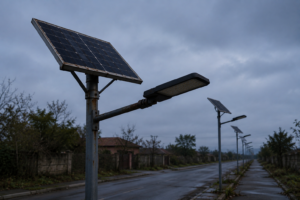
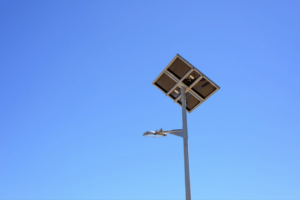
Solar-powered systems can meet all standard parking lot lighting requirements while eliminating ongoing electrical costs. Modern solar LED fixtures provide excellent light output, distribution patterns, and reliability comparable to traditional systems.
Our solar parking lot fixtures deliver precise photometric performance that meets IES recommendations and municipal codes. Advanced LED optics provide uniform light distribution with minimal glare, ensuring both compliance and optimal visibility.
Battery technology advances enable reliable operation through multiple cloudy days. Lithium battery systems provide 7-10 year lifespans with consistent performance in extreme weather conditions.
Smart controls optimize energy usage by adjusting light output based on ambient conditions and usage patterns. These features ensure all requirements are met while maximizing energy efficiency and battery life.
Photometric Analysis and Compliance
Sometimes, a detailed photometric analysis is needed that demonstrates compliance with all applicable standards. This technical documentation proves that your lighting system provides adequate illumination levels and uniformity ratios.
Our certified team conducts comprehensive photometric calculations using professional lighting software. These calculations account for fixture placement, mounting heights, light distribution patterns, and maintenance factors to ensure long-term compliance.
The photometric analysis process includes:
- Site survey and measurement
- Lighting layout design
- Photometric calculations
- Uniformity ratio verification
- Glare and light trespass analysis
- Compliance documentation preparation
- Municipal submission and approval coordination
Regular photometric testing ensures continued compliance as fixtures age and environmental conditions change. Our monitoring systems track performance and alert property owners to potential compliance issues before they become problems.
Cost Comparison: Solar vs. Traditional Systems
The financial advantages of solar parking lot lighting become clear when comparing the total cost of ownership over the system’s lifespan. While initial costs may appear higher, solar systems eliminate ongoing operational expenses that quickly offset the investment.
Initial Investment Comparison
| System Type | Equipment Cost | Installation Cost | Infrastructure Cost | Total Initial Investment |
| Traditional | $800-1,200 | $500-800 | $2,000-5,000 | $3,300-7,000 per pole |
| Solar | $3,500-5,500 | $300-500 | $0-200 | $3,800-6,200 per pole |
Annual Operating Costs
| Cost Category | Traditional System | Solar System |
| Electricity | $400-800 per pole | $0 |
| Maintenance | $150-300 per pole | $50-100 per pole |
| Lamp Replacement | $75-150 per pole | $0 |
| Total Annual Cost | $625-1,250 per pole | $50-100 per pole |
Traditional systems generate substantial ongoing costs that continue throughout their operational life. These expenses include electricity consumption, routine maintenance, lamp replacements, and repairs.
Solar systems eliminate electricity costs entirely while requiring minimal maintenance. LED fixtures typically last 15-20 years without replacement, and battery systems require replacement only every 7-10 years.
The payback period for solar parking lot lighting typically ranges from 3-7 years, depending on local electricity rates and installation conditions. After payback, solar systems provide decades of free operation.
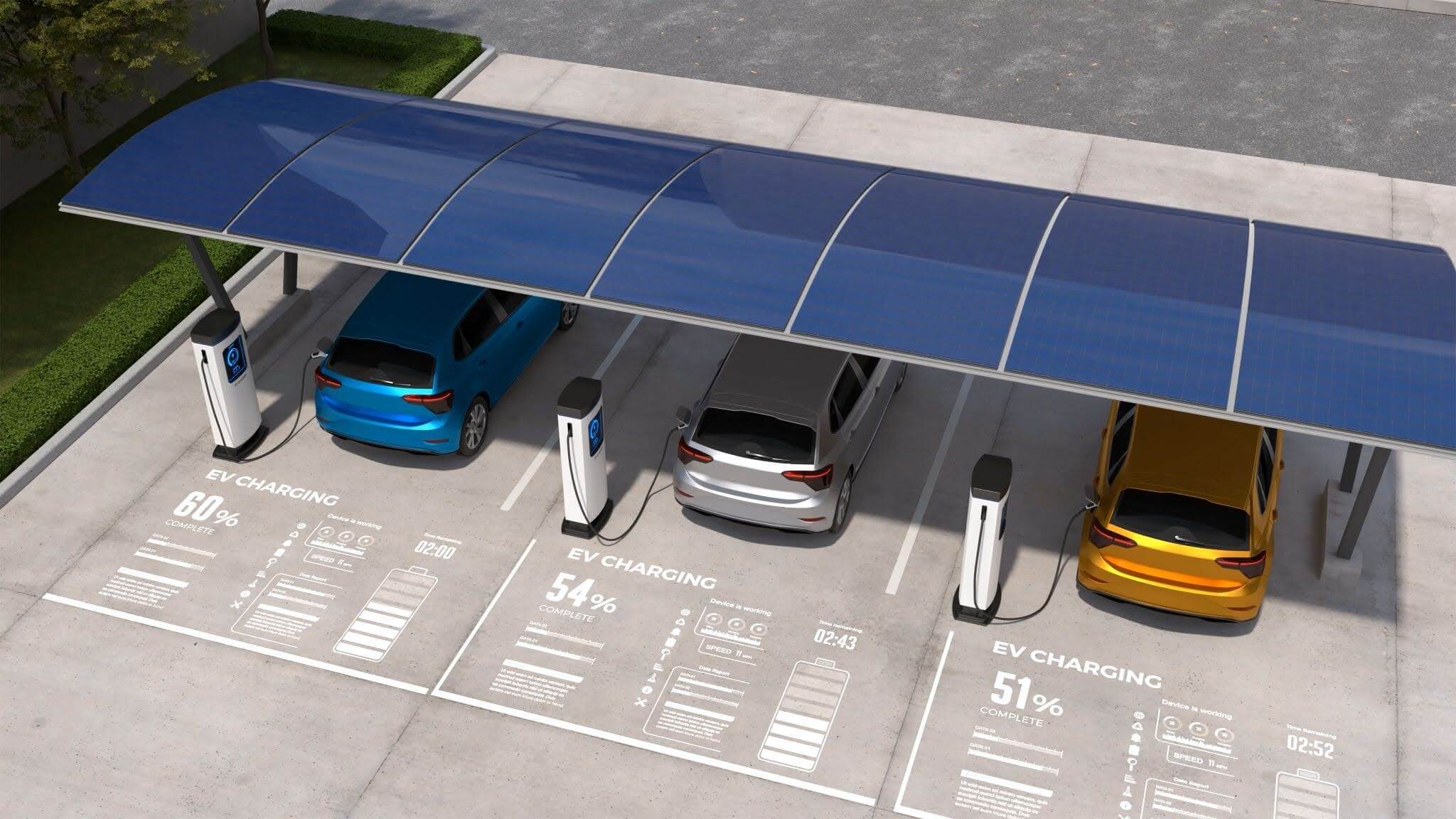
Infrastructure Savings with Grid-Independent Systems
Solar parking lot lighting eliminates the need for costly electrical infrastructure, providing immediate savings on installation and long-term benefits for expansion projects.
Traditional parking lot lighting requires extensive electrical work, including trenching, conduit installation, transformer placement, and electrical service upgrades. These infrastructure costs often exceed the fixture costs and create ongoing maintenance requirements.
Grid-independent solar systems install quickly without electrical infrastructure. Each pole operates independently, eliminating single points of failure that can shut down entire lighting circuits.
This independence provides operational advantages during power outages, ensuring continuous security lighting when it’s needed most. Traditional systems fail during outages unless expensive backup generators are installed.
Environmental and Regulatory Benefits
Solar parking lot lighting helps property owners meet environmental regulations and sustainability goals while reducing their carbon footprint. Many municipalities offer incentives or expedited permitting for environmentally beneficial projects.
As International Dark-Sky Association-certified specialists, we design systems that minimize light pollution while meeting all parking lot lighting requirements. This approach protects wildlife habitats and preserves night sky visibility for communities.
Energy independence reduces strain on local electrical grids, particularly during peak demand periods. This benefit becomes increasingly important as electrical infrastructure ages and demand continues growing.
Solar systems contribute to LEED certification and other green building standards. These certifications can increase property values and attract environmentally conscious tenants.
Key environmental benefits include:
- Zero ongoing carbon emissions
- Reduced strain on the electrical infrastructure
- Minimal light pollution with Dark-Sky compliance
- No hazardous materials like mercury
- Recyclable components at the end of life
- Support for renewable energy adoption goals
Weather Resistance and Reliability
Modern solar parking lot lighting systems provide exceptional reliability in all weather conditions. Our fixtures are engineered to withstand extreme temperatures, high winds, and coastal environments while maintaining consistent performance.
Battery technology advances enable operation through extended cloudy periods. Lithium battery systems maintain capacity in sub-zero temperatures and provide consistent performance throughout their 7-10 year lifespan.
Smart charging algorithms optimize battery performance by adjusting charging rates based on weather conditions and energy availability. These systems ensure reliable operation while maximizing battery life.
Weather-resistant enclosures protect all system components from moisture, dust, and corrosion. Our fixtures carry IP65 ratings for complete protection against environmental hazards.
Return on Investment Calculations
Solar parking lot lighting provides compelling financial returns through eliminated electrical costs, reduced maintenance expenses, and infrastructure savings. The exact ROI depends on local conditions but typically ranges from 15-25% annually after payback.
Property owners save immediately on electrical infrastructure costs, which can range from $2,000-5,000 per traditional pole location. These savings often offset much of the initial solar system investment.
Ongoing operational savings accumulate quickly. A typical parking lot with 20 fixtures saves $12,000-25,000 annually in electricity and maintenance costs compared to traditional lighting.
Over a 20-year system life, total savings can exceed $300,000 for a moderate-sized parking lot.
Customized Solutions for Challenging Environments
Every parking lot presents unique challenges that require customized lighting solutions. Our US-based engineering team designs systems specifically tailored to address site-specific requirements and environmental conditions.
- Coastal environments require enhanced corrosion protection and salt spray resistance. We specify marine-grade materials and protective coatings that ensure long-term performance in harsh coastal conditions.
- Extreme temperature locations need battery systems rated for the local climate range. We select battery technologies and insulation systems appropriate for each installation environment.
- High-wind areas require specialized mounting systems and aerodynamic fixture designs. Our structural engineers calculate wind loads and specify appropriate foundations for reliable operation.
- Snow load considerations affect both structural design and solar panel positioning. We optimize panel tilt angles and specify mounting systems that shed snow effectively while maximizing energy generation.
Long-Term Performance and Monitoring
Ensuring continued compliance requires ongoing performance monitoring and maintenance. Our systems include smart monitoring capabilities that track performance and alert property owners to potential issues.
LED fixtures provide consistent light output throughout their 15-20 year lifespan with minimal degradation. This consistency ensures continued compliance with illumination requirements without frequent re-lamping.
Battery monitoring systems track charge cycles, capacity, and performance indicators. Predictive maintenance alerts allow proactive battery replacement before system failures occur.
Remote monitoring capabilities enable real-time system status monitoring from any location. Property managers can verify system operation, track energy production, and schedule maintenance efficiently.
Our maintenance programs ensure optimal system performance throughout the equipment’s lifespan. Regular inspections, cleaning, and component testing maintain compliance.
Transform Your Parking Lot with Solar Solutions
Understanding parking lot lighting requirements doesn’t have to mean accepting high ongoing costs and complex infrastructure. Solar technology offers a proven path to regulatory compliance while dramatically reducing your lighting expenses and environmental impact.
At SolarPath Sun Solutions, we combine nearly two decades of experience with cutting-edge solar technology to deliver parking lot lighting systems that exceed performance expectations while eliminating operational costs. Our comprehensive approach ensures your investment meets all regulatory requirements while providing exceptional long-term value.
Ready to discover how much you can save with solar parking lot lighting? Contact our experts today for a comprehensive analysis of your specific parking lot lighting requirements and customized solar solution recommendations.
Pricing and savings estimates vary based on local utility rates, site conditions, and specific system requirements.