Do solar security lights work? This question comes up frequently in our conversations with municipalities, developers, and security-conscious property owners. After 19 years of testing and implementing solar security lighting solutions across North America, we at SolarPath Sun Solutions have gathered extensive performance data to provide a definitive answer.
Yes, solar security lights work effectively when properly designed, positioned, and maintained. However, their performance depends on several critical factors that determine whether they’ll meet your specific security lighting needs. Understanding these factors can mean the difference between reliable perimeter protection and disappointing results.
Our field testing across diverse environments has shown that solar security lights work best when their components are carefully matched to local conditions. The key lies in understanding how photovoltaic efficiency, battery capacity, LED output, and motion sensor integration work together as a complete system.
How Solar Security Lights Function
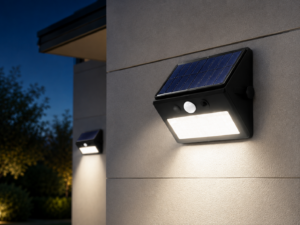
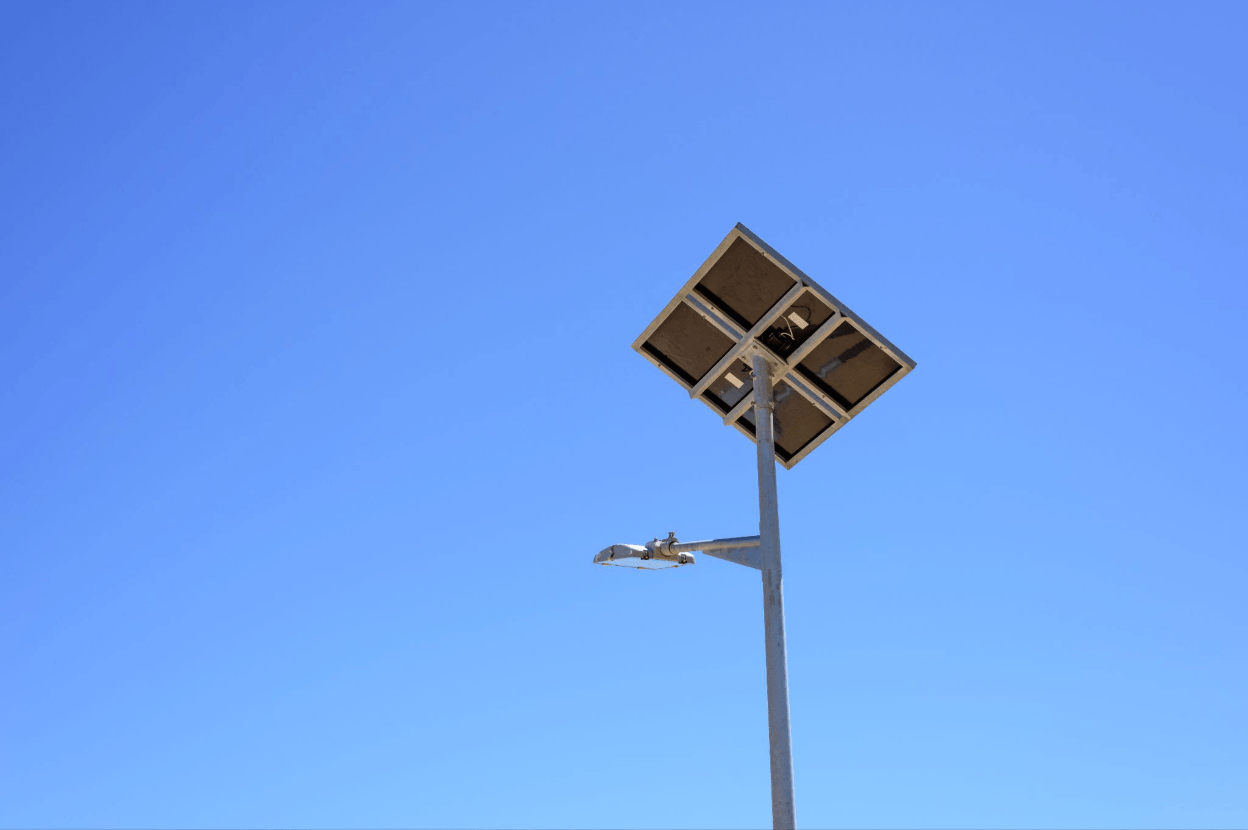
Solar security lights operate through a straightforward yet sophisticated process. During daylight hours, photovoltaic panels convert sunlight into electrical energy, which charges built-in batteries. When motion sensors detect movement after dark, the stored energy powers high-efficiency LED lights to illuminate the protected area.
The effectiveness of this process depends on four main components working in harmony. The photovoltaic panel must generate sufficient energy to fully charge the battery system. The battery must store enough power to operate the lights through periods of limited sunlight. The LED array must provide adequate luminal output for security purposes. The motion sensor must reliably detect movement without false triggers.
Our engineering team has found that component quality varies significantly across manufacturers. Premium systems use monocrystalline solar panels, lithium iron phosphate batteries, and commercial-grade motion sensors. These components typically deliver 3-5 years longer service life compared to basic alternatives using polycrystalline panels and lead-acid batteries.
Key Performance Factors
Photovoltaic Panel Efficiency
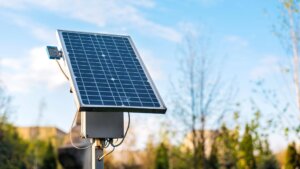
The solar panel serves as the energy foundation for the entire system. Through our testing, we’ve documented that panel efficiency directly correlates with system reliability, especially during challenging weather conditions.
Monocrystalline panels, which we recommend for most installations, typically achieve 18-22% efficiency rates. These panels continue generating power even under overcast conditions, producing approximately 10-25% of their rated output on cloudy days. This partial charging capability often makes the difference between reliable operation and system failure during extended cloudy periods.
Panel positioning significantly affects energy generation. Our photometric assessments show that panels oriented south at the proper tilt angle for local latitude generate 15-30% more energy than incorrectly positioned alternatives. Shading from nearby structures, trees, or other obstructions can reduce output by 50% or more.
Battery Capacity Optimization
Battery performance determines whether solar security lights work consistently through the night and during periods of limited sunlight. Our field data shows that battery sizing must account for local climate conditions, expected runtime, and seasonal sunlight variations.
Lithium iron phosphate batteries, which we specify for most installations, maintain 80% capacity after 2000+ charge cycles. These batteries also perform better in temperature extremes, operating effectively from -4°F to 140°F. Lead-acid alternatives typically last only 500-800 cycles and lose significant capacity below 32°F.
Proper battery sizing requires calculating the total energy needed for nightly operation plus reserves for cloudy periods. We typically size battery systems to provide 3-5 nights of operation without solar charging, depending on local weather patterns and security requirements.
LED Luminal Output & Distribution
LED technology has revolutionized solar security lighting effectiveness. Modern high-efficiency LEDs produce 140-160 lumens per watt, compared to 60-80 lumens per watt from earlier generations. This efficiency improvement allows solar security lights to work with smaller solar panels and batteries while providing superior illumination.
Light distribution patterns matter as much as total output. Our installations use LEDs with carefully designed optics to create uniform illumination patterns that eliminate dark spots where intruders might hide. Typical security applications require 1-3 foot-candles of illumination across the protected area.
Color temperature also affects security effectiveness. We generally recommend 4000K-5000K LEDs, which provide excellent color rendering for security cameras while remaining comfortable for human vision. This color temperature also helps reduce light pollution compared to cooler alternatives.
Motion Sensor Integration & Reliability
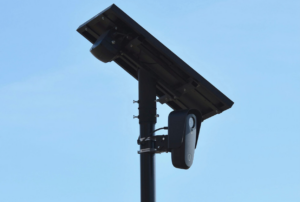
Motion sensor quality separates reliable systems from problematic installations. Our testing shows that passive infrared (PIR) sensors work best for most security applications, detecting heat signatures from people and vehicles while ignoring small animals and wind-blown debris.
Dual-technology sensors, combining PIR with microwave detection, provide enhanced reliability in challenging environments. These sensors reduce false triggers while maintaining high sensitivity to genuine security threats. Adjustable sensitivity settings allow fine-tuning for specific site conditions.
Detection range and angle affect system effectiveness. Most security applications benefit from sensors with 25-30 foot detection ranges and 110-120 degree coverage angles. Multiple sensors may be needed for comprehensive area coverage in large installations.
Real-World Performance Data
Our documented performance data from municipal and commercial installations provides concrete evidence that solar security lights work effectively across diverse conditions. This data comes from continuous monitoring systems we install to track long-term performance.
In New Jersey installations, we’ve recorded 95%+ uptime during summer months and 87-92% uptime during winter months, depending on specific site conditions and system sizing. Florida installations consistently achieve 96-98% uptime year-round due to more favorable solar conditions.
Battery performance varies significantly with temperature. Our northern installations show 15-20% reduced battery capacity during winter months, while southern installations maintain more consistent performance. This variation reinforces the importance of proper battery sizing for local conditions.
LED degradation follows predictable patterns in our monitored installations. High-quality LEDs maintain 90% of their initial output after 50,000 hours of operation, while lower-grade alternatives may drop to 70-80% output in the same timeframe.
Comparing Solar vs. Traditional Security Lighting
Installation & Infrastructure Requirements
Traditional AC-powered security lights require electrical infrastructure, including conduit, wiring, and often trenching for underground runs. Installation costs for AC systems typically range from $800-2,500 per fixture, depending on distance from existing electrical service.
Solar security lights eliminate infrastructure requirements, reducing installation costs to $200-600 per fixture in most cases. This cost advantage becomes more pronounced in remote locations where electrical service installation would be expensive or impractical.
Solar security lights work particularly well for temporary installations or locations where electrical permitting would be complex. Many municipalities prefer solar solutions for parks, parking lots, and perimeter fencing where AC power isn’t readily available.
Operating Costs & Maintenance
AC-powered security lights consume 50-150 watts continuously when illuminated, resulting in ongoing electrical costs. Based on average commercial electrical rates, annual operating costs range from $45-135 per fixture for lights operating 12 hours nightly.
Solar security lights have zero ongoing electrical costs but require periodic battery replacement. High-quality lithium batteries typically last 5-7 years, with replacement costs of $80-200 per fixture. This results in lower lifetime operating costs for most applications.
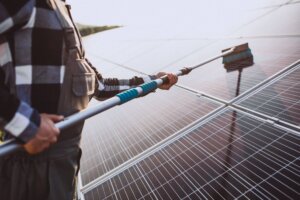
Maintenance requirements differ between technologies. AC systems require electrical troubleshooting and potential wire damage repairs. Solar systems need periodic cleaning of solar panels and battery monitoring, but these tasks don’t require electrical expertise.
| Performance Factor | Solar Security Lights | Traditional AC Lights |
| Installation Cost | $200-600 per fixture | $800-2,500 per fixture |
| Annual Operating Cost | $0 electrical cost | $45-135 per fixture |
| Maintenance Requirements | Panel cleaning, battery monitoring | Electrical troubleshooting, wire repairs |
| Infrastructure Needed | None | Electrical service, conduit, wiring |
| Installation Timeframe | 1-2 hours per fixture | 4-8 hours per fixture |
Common Limitations & Solutions
Seasonal Sunlight Variations
Seasonal sunlight changes affect system performance, particularly in northern locations. During winter months, available sunlight may decrease by 40-60% compared to summer conditions. This reduction can challenge battery capacity if systems aren’t properly sized.
We address seasonal variations through careful battery sizing and panel positioning. Systems designed for year-round reliability typically include 20-30% excess battery capacity beyond calculated requirements. This oversizing ensures consistent operation during the shortest, cloudiest days of winter.
Some installations benefit from larger solar panels to compensate for reduced winter sun angles. Panel tilting mechanisms, while more expensive, can improve winter performance by 15-25% in northern locations.
Weather Impact and Durability
Extended cloudy periods test system resilience. Our monitoring data shows that well-designed systems typically operate 3-5 consecutive cloudy days without performance degradation. Beyond this timeframe, reduced illumination time or dimmed output may occur until solar charging resumes.
Component durability affects long-term reliability. We specify fixtures rated IP65 or higher for weather resistance, with operating temperature ranges suitable for local climate extremes. Quality fixtures consistently operate through hurricanes, ice storms, and temperature swings from -20°F to 120°F.
Wind loading can affect panel and fixture positioning over time. Proper mounting hardware and periodic inspection prevent alignment issues that could reduce solar charging effectiveness.
Installation Positioning Requirements
- Proper positioning is critical for optimal performance. Solar security lights work best when solar panels face true south (in the Northern Hemisphere) with tilt angles matching local latitude. Even 30-degree deviations from optimal orientation can reduce energy generation by 10-15%.
- Shading analysis during system design prevents performance issues. Seasonal shade patterns from deciduous trees must be considered, as winter sun angles may create shadows that don’t exist during summer months when leaves provide natural shading.
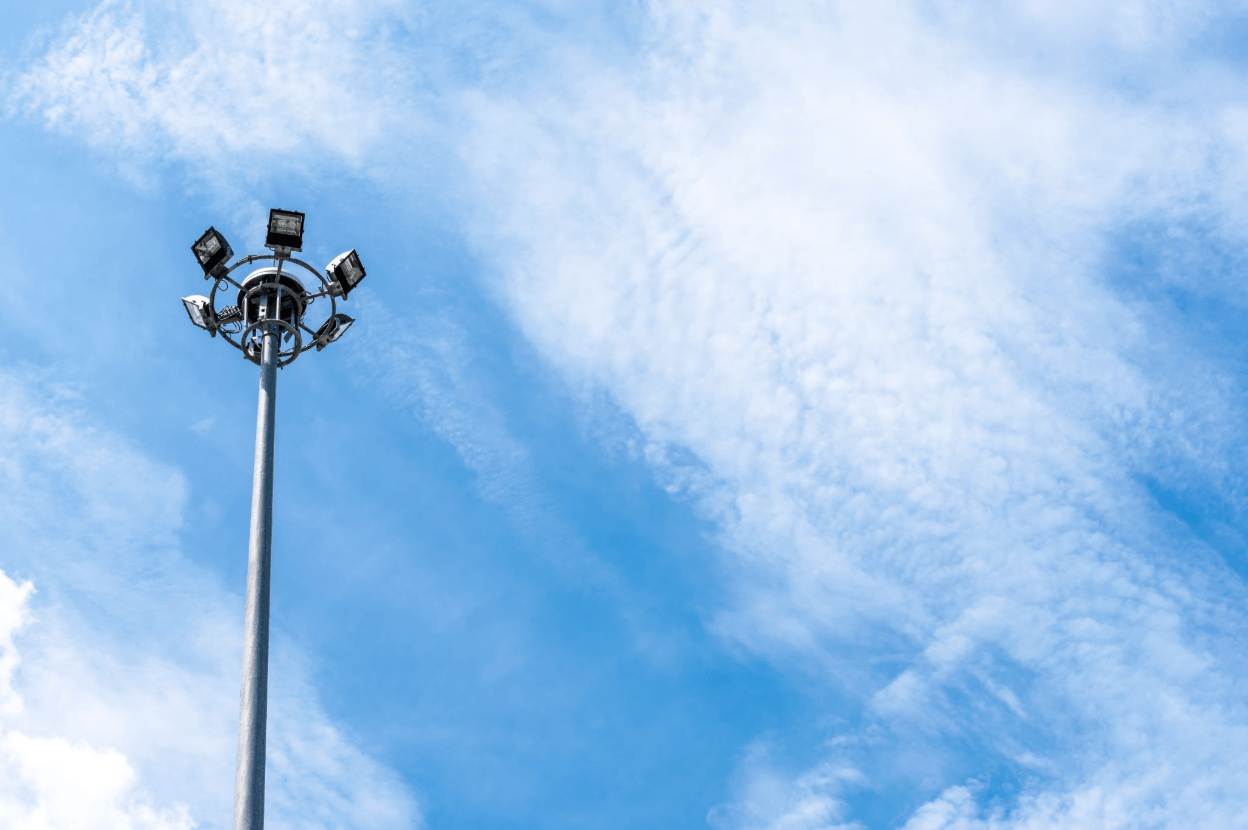
- Height and mounting considerations affect both solar charging and security effectiveness. Panels mounted 12-15 feet high typically avoid most shading issues while keeping fixtures above easy tampering reach.
Optimization Strategies for Maximum Effectiveness
Site Assessment & Planning
Thorough site assessment forms the foundation of effective solar security lighting. Our evaluation process includes solar path analysis, shade mapping, and security requirement assessment to ensure solar security lights work optimally for each specific location.
Solar irradiance measurements help determine realistic energy generation expectations. We use specialized meters to measure actual sunlight availability throughout the day and across seasons. This data drives accurate system sizing calculations.
Security requirement analysis identifies necessary illumination levels, coverage areas, and operating schedules. Different applications require different approaches – parking lot security differs significantly from perimeter fence monitoring or building entry illumination.
Component Selection & Sizing
System component selection must match site conditions and performance requirements. Our engineering team uses detailed calculations to size solar panels, batteries, and LED arrays for specific applications and geographic locations.
The following numbered list outlines our systematic approach to component optimization:
- Calculate total daily energy requirements based on LED wattage, operating hours, and desired reserve capacity
- Size solar panels for worst-case winter conditions with 20-25% safety margin
- Select battery capacity to provide 3-5 nights of operation without solar charging
- Choose LED arrays with appropriate luminal output and distribution patterns for security needs
- Specify motion sensors with detection ranges and sensitivity suitable for the protected area
- Design mounting systems for optimal solar panel orientation and fixture positioning
Installation Best Practices
Proper installation techniques significantly affect long-term performance. Our installation teams follow standardized procedures developed through years of field experience to ensure solar security lights work reliably from day one.
Foundation and mounting considerations prevent fixture movement that could misalign solar panels or motion sensors. Concrete foundations or heavy-duty ground anchors provide stability in high-wind conditions.
Wiring and connection techniques must withstand weather extremes and temperature cycling. We use marine-grade connections with dielectric grease to prevent corrosion in coastal or high-humidity environments.
Performance Monitoring and Maintenance
Monitoring System Performance
Continuous performance monitoring helps identify issues before they affect security effectiveness. Our installed monitoring systems track solar charging rates, battery capacity, LED output, and motion sensor triggers to ensure optimal operation.
Remote monitoring capabilities allow proactive maintenance scheduling. We can identify declining battery capacity, reduced solar charging efficiency, or LED degradation trends before they cause system failures.
Performance data collection also validates system design assumptions and helps optimize future installations. This feedback loop has improved our system designs consistently over our 19 years of operation.
Maintenance Protocols & Schedules
Regular maintenance ensures long-term reliability and performance. Our maintenance protocols address the most common issues that can affect whether solar security lights work consistently over their design life.
Key maintenance activities include:
- Monthly visual inspections to check for physical damage, loose connections, or obstructions
- Quarterly solar panel cleaning to remove dust, pollen, or debris that reduces charging efficiency
- Semi-annual battery testing to verify capacity and identify replacement needs
- Annual comprehensive system testing, including motion sensor calibration and LED output verification
- Seasonal adjustment checks to ensure optimal panel positioning and clear sight lines
Troubleshooting Common Issues
Most solar security lighting problems stem from a few common causes. Our field service data shows that proper troubleshooting can resolve 85% of reported issues without component replacement.
- Battery-related issues account for approximately 60% of service calls. These typically involve insufficient charging due to shading, panel misalignment, or normal battery aging. Regular capacity testing helps predict and prevent battery failures.
- Motion sensor problems, representing about 25% of service issues, usually involve sensitivity adjustment or cleaning of sensor lenses. Environmental factors like spider webs, dust accumulation, or nearby heat sources can affect sensor performance.
- LED degradation occurs gradually but can affect security effectiveness if not monitored. Color shift or reduced output typically indicates approaching LED replacement needs.
| Common Issue | Frequency | Typical Cause | Resolution Time |
| Reduced Runtime | 35% | Battery aging/insufficient charging | 2-4 hours |
| Motion Sensor Issues | 25% | Sensitivity/environmental factors | 1-2 hours |
| Dim/No Illumination | 20% | LED degradation/connection issues | 1-3 hours |
| Inconsistent Operation | 15% | Loose connections/water intrusion | 2-6 hours |
| Complete System Failure | 5% | Multiple component failure | 4-8 hours |
Applications & Use Cases
Municipal & Public Safety Applications
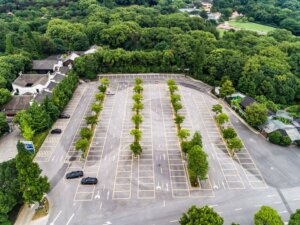
Municipal installations represent a significant portion of our project portfolio. Solar security lights are a particularly good fit for parks, parking areas, walking trails, and public facilities where electrical infrastructure would be expensive or disruptive to install.
Public safety applications require high reliability and consistent performance. We typically specify premium components and larger battery reserves for these installations to ensure lights function when needed most for public security.
Many municipalities appreciate the environmental benefits and reduced operating costs of solar security lighting. These factors often justify higher initial costs through long-term savings and sustainability goals.
Commercial & Industrial Security
Commercial security applications often require integration with existing security systems, including cameras and alarm systems. Solar security lights work effectively as standalone systems or as components of comprehensive security installations.
Industrial facilities frequently need security lighting in remote areas where electrical service would be expensive. Solar solutions provide immediate security coverage while avoiding lengthy electrical installation projects and permitting requirements.
Loading docks, perimeter fencing, equipment storage areas, and parking facilities represent common commercial applications where solar security lighting excels.
Residential & Property Protection
Residential applications typically focus on driveway security, perimeter protection, and entry area illumination. Homeowners appreciate solar security lights because they provide protection without increasing electrical bills or requiring complex installation.
Property protection applications, including vacation homes, rental properties, and undeveloped land, benefit from the installation simplicity and zero operating costs. These locations often lack electrical service, making solar solutions the most practical option.
Making the Right Choice for Your Needs
Assessment Criteria for Solar Suitability
Determining whether solar security lights work for your specific application requires an honest assessment of site conditions, performance requirements, and budget considerations. Not every location or application suits solar technology equally well.
Favorable conditions for solar security lighting include:
- Adequate sun exposure with minimal shading during peak sun hours
- Moderate security requirements that don’t demand continuous high-intensity illumination
- Remote locations where the electrical infrastructure costs would be high
- Environmental consciousness where sustainability factors into decision-making
- Budget constraints that favor lower installation costs over minimal operating expenses
Less favorable conditions might suggest traditional electrical solutions:
- Heavy shading from buildings, trees, or other permanent obstructions
- Extreme weather conditions with frequent extended cloudy periods
- High-security applications requiring continuous bright illumination
- Locations with existing electrical infrastructure and low installation costs
Budget Considerations & ROI
Initial cost comparisons should include total project costs, not just fixture prices. Solar systems typically cost less to install but may have higher fixture costs compared to basic AC alternatives.
Long-term cost analysis usually favors solar solutions, especially in remote locations. Zero electrical operating costs and minimal maintenance requirements provide attractive returns on investment over 10-15 year system lifespans.
Environmental benefits may justify premium costs for organizations with sustainability goals. Solar security lighting contributes to LEED certification points and demonstrates environmental responsibility.
Ready to Implement Reliable Solar Security Lighting?
Solar security lights work effectively when properly designed and installed for specific site conditions and requirements. Our 19 years of field experience across North America have proven that these systems provide reliable, cost-effective security lighting for diverse applications.
SolarPath Sun Solutions offers comprehensive solar security lighting solutions, from initial site assessment through long-term performance monitoring. Our engineering team ensures your installation delivers the security you need. Contact us today to create the perfect solution for your project!