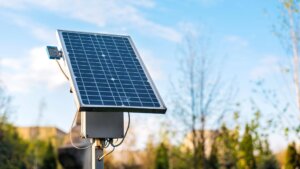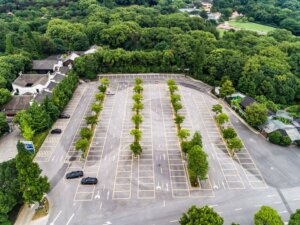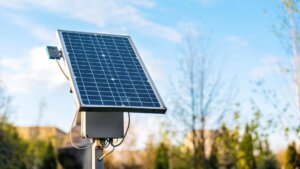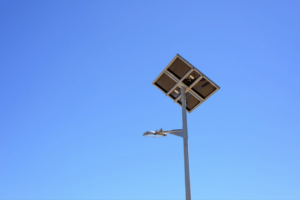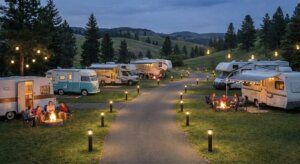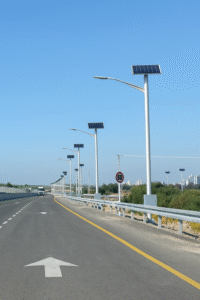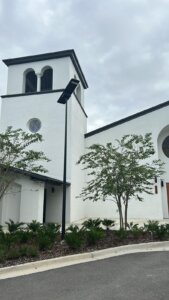
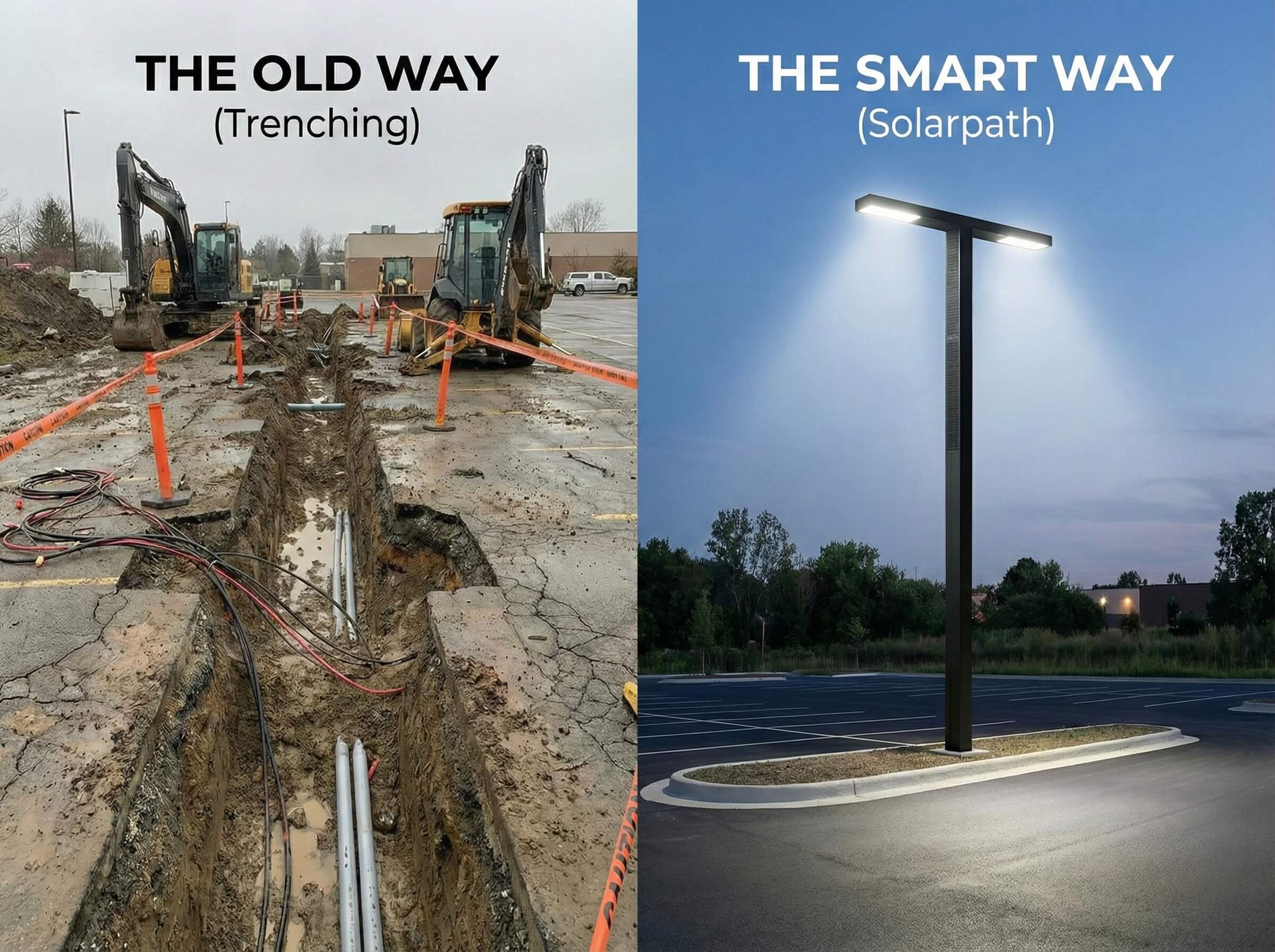
This comparison shows why many campgrounds and RV parks choose commercial solar lighting over traditional trenching.
The outdoor hospitality industry is booming. From high-end glamping resorts to family-friendly RV parks, guests are flocking to nature. However, modern travelers no longer accept total darkness or harsh floodlights. They expect a balance between rustic charm, comfort, and safety.
For campground owners, RV park operators, and facility managers, meeting these expectations while controlling costs is a constant challenge. Traditional hard-wired lighting requires expensive infrastructure, ongoing electricity bills, and frequent maintenance.
This is where commercial solar lighting for campgrounds and glamping sites becomes a strategic infrastructure upgrade rather than just an aesthetic choice. More outdoor hospitality properties are cutting the cord and switching to solar lighting and hybrid infrastructure solutions.
The End of the Trenching Nightmare in Campgrounds & RV Parks
The biggest expense in outdoor lighting installation is rarely the fixture itself. It is the trenching. Traditional grid-connected lighting requires digging trenches to run copper wiring across pathways, parking areas, and common spaces.
In established RV parks and wooded glamping sites, trenching is disruptive and costly. It damages tree roots, ruins landscaping, and interferes with guest experiences during construction.
Commercial solar lighting eliminates this problem entirely.
-
Zero trenching required – no disruption to paths or natural terrain
-
Drop and play installation in remote or off grid areas
-
Preservation of the natural environment guests came to enjoy
Safety and Liability in Campgrounds: Why Solar Lighting Matters
Guest safety is not optional in the hospitality industry. Poorly lit walkways, uneven parking areas, and dark signage increase the risk of trips and falls. In the U.S., liability claims related to inadequate lighting are a serious concern for commercial properties.
Solar lighting provides consistent dusk-to-dawn illumination without increasing electricity costs. Unlike low-quality residential solar lights, commercial outdoor solar lighting systems are designed to operate reliably throughout the night, even after cloudy days.
Well lit pathways, entrances, and common areas reduce accidents, protect guests, and lower liability exposure.
Sustainable Luxury: How Solar Lighting Attracts Modern Travelers
Today’s travelers, especially Millennials and Gen Z, actively seek eco-friendly destinations. Sustainability is no longer a bonus feature. It is a deciding factor.
Visible solar lighting infrastructure sends a clear message that your property values environmental responsibility. It demonstrates a commitment to:
-
Reducing carbon emissions
-
Protecting local ecosystems
-
Investing in modern, green technology
Solar lighting transforms a utility expense into a branding asset. You are not just lighting a path. You are reinforcing your identity as a sustainable, forward-thinking destination.
Operational Savings: Solar Lighting vs Traditional Electrical Infrastructure
Extending grid power across a large campground or glamping resort significantly increases capital expenditures during construction. Once installed, electricity costs and maintenance expenses continue indefinitely.
Commercial solar lighting changes the equation. After installation, the energy is free. There are no monthly utility bills tied to those fixtures. Modern LED technology and smart solar management systems also reduce long-term maintenance compared to traditional wired lighting, which is prone to corrosion, wiring faults, and electrical failures.
For large outdoor hospitality properties, solar lighting delivers meaningful long-term operational savings.
Commercial Solar Lighting vs Residential Solar Fixtures
Not all solar lighting solutions are created equal. Consumer-grade solar garden lights are not suitable for commercial environments. They offer limited brightness, short runtimes, and poor durability in harsh weather.
Solarpath designs infrastructure-grade commercial solar lighting systems built for large scale applications across the U.S. These systems feature high capacity battery storage, professional-grade components, and light output comparable to traditional streetlighting.
Whether illuminating main entrances, perimeter fencing, internal roads, or luxury tent platforms, professional solar lighting ensures reliability, safety, and business continuity.
Ready to See the Light?
Do not let installation costs or electrical infrastructure limitations hold back your property’s potential. Commercial solar lighting offers a smarter, cleaner, and more cost-effective way to upgrade outdoor environments.
Stop guessing your costs. Download our free Infrastructure Audit and receive a clear analysis of your site’s lighting needs, installation options, and potential savings through hybrid solar lighting solutions.
Learn more about our commercial solar lighting solutions for outdoor hospitality properties.
Frequently Asked Questions About Solar Lighting for Campgrounds & Glamping
Is solar lighting bright enough for RV parks and campgrounds?
Yes. Commercial solar lighting systems are designed to provide consistent, high-output illumination comparable to traditional grid-powered lights. Infrastructure-grade systems operate dusk-to-dawn and maintain performance even after cloudy days.
How long do commercial solar lights last?
High quality commercial solar lighting systems are built for long term use. With proper design and battery capacity, systems typically last 10-15 years, with minimal maintenance compared to traditional wired lighting.
Can solar lighting work in shaded or wooded glamping sites?
Yes. Hybrid solar lighting solutions can be engineered to perform in partial shade using optimized panel placement, higher battery storage, and smart energy management to ensure reliable nighttime operation.
Is solar lighting more expensive than traditional electrical lighting?
While the upfront cost may be comparable, solar lighting eliminates trenching, wiring, and ongoing electricity costs. Over time, this results in significantly lower total cost of ownership for campgrounds and RV parks.
What areas of a campground should be solar illuminated first?
Priority areas typically include main entrances, internal roads, pathways to restrooms, parking areas, signage, and common spaces where guest safety and visibility are critical.